Built for Winter: The Parts of a Luxury Landscape You’ll Never See
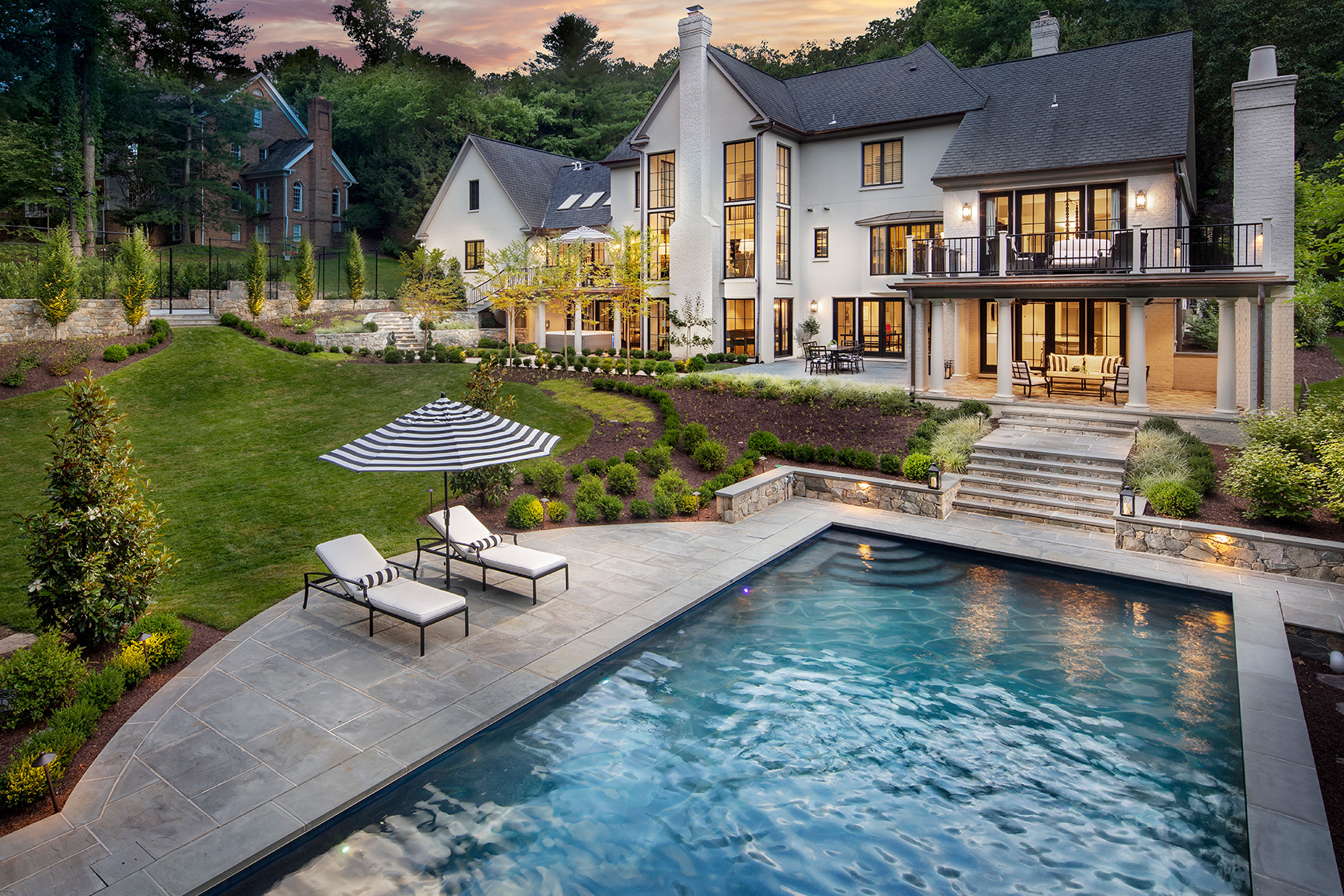
Most people judge a landscape by what they can see, from the stone and plantings to the way a terrace steps down toward the pool. Those details are often what first draw clients to a design, but some of the most important decisions on a project happen in work that’s covered up long before anyone sits down on the new patio. For most of the year, that work goes unnoticed, but winter has a way of putting it to the test.
What Winter Asks of a Landscape
Northern Virginia winters aren’t especially harsh, but they are unpredictable. A frozen morning can give way to a mild afternoon, and that back-and-forth repeats all season long.
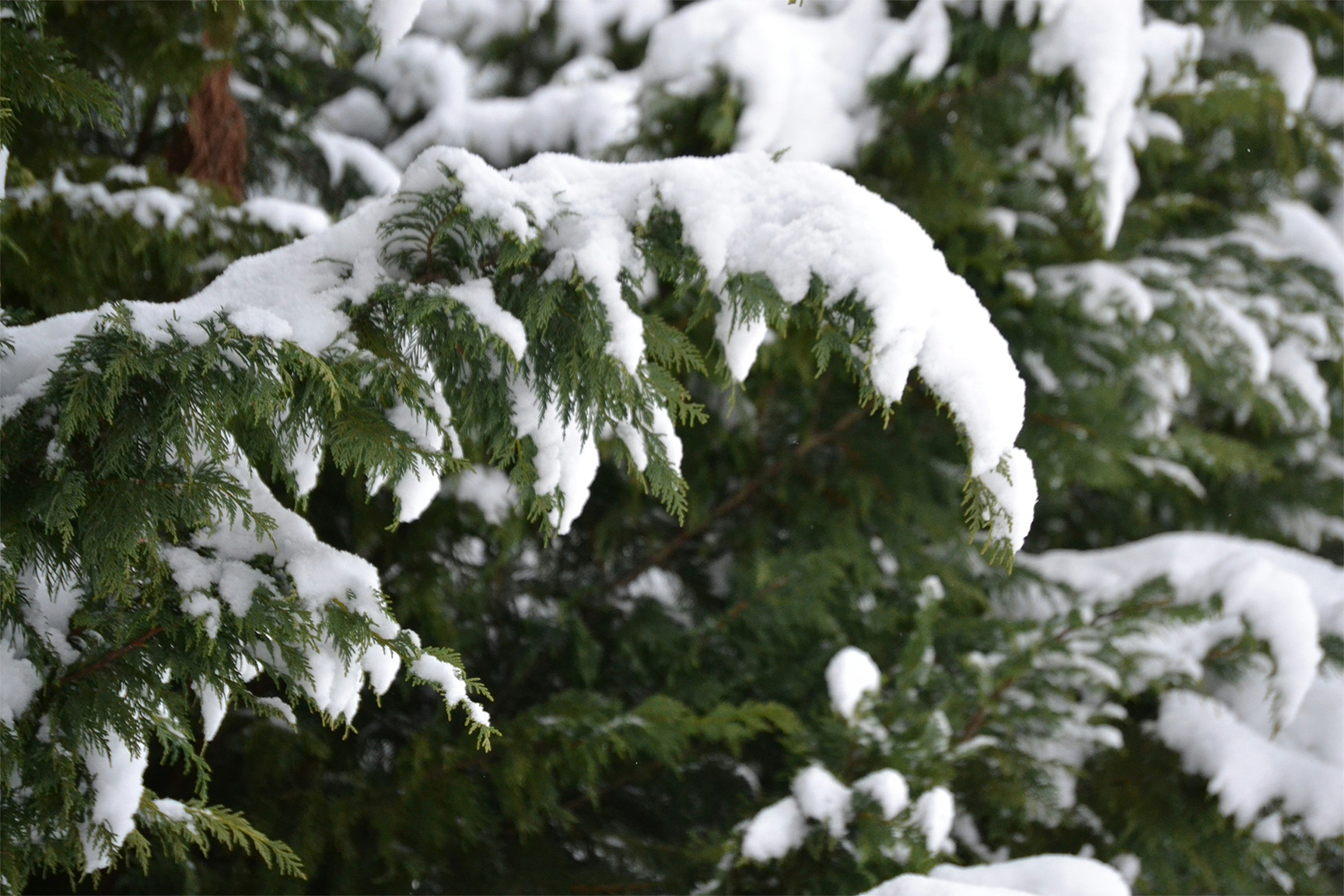
A few inches of snow might melt in the afternoon sun, soak into the ground and freeze again overnight, while the shaded side of a property can stay frozen for weeks at a time. Each time water freezes in the ground it expands a little, and each time it thaws the ground settles again.
Over a few winters, that constant movement is enough to shift stone and nudge a wall out of line, and when those problems appear, they can almost always be traced back to what happened below the surface during construction.
What Keeps a Patio Looking New
A patio is built from the ground up, and the stone you walk on is the last layer to go down. Beneath it are layers of crushed stone that have been packed down firmly, one at a time, to create a solid foundation that won’t settle or shift as the ground freezes and thaws. That preparation is the main reason one patio stays smooth for years while another starts to dip in the middle after a few seasons.
How the stones are set matters too, since properly filled joints keep water from slipping between them and firmly held edges keep the whole surface from slowly spreading outward. We also shape every patio and walkway so that rain and melting snow run off and away from the house, with a slope so gentle you’d never notice it walking across.
Walls Built to Stay Straight
When the soil behind a retaining wall is soaked with rain or melting snow, it becomes heavier and presses against the wall with more force, and that pressure increases again once the ground freezes. If the water has no way to escape, the wall eventually starts to give, which is why so many older walls around the region have begun to bow outward or tip forward.
Our walls are built with a layer of loose stone behind them that lets water move freely, along with a channel at the base that carries it safely away. Once the wall is finished and the plantings fill in around it, there’s no sign any of it is there.
Keeping Water Where It Belongs
Picture guests arriving for a holiday dinner on a cold December evening and stepping out of the car onto a slick stretch of walkway near the garage. Often, the cause is something small, like a downspout that empties across the path or a low spot that collects water near the front steps. These issues might seem minor in summer, but they shape nearly everything about how a property holds up through the colder months.
Good design handles water before it becomes a problem. Downspouts can be connected to underground lines that carry water out of sight, and the ground around the home can be gently shaped so runoff moves away from walkways and the foundation. In some spots, a planted area designed to soak up rainwater can handle the runoff and add to the garden.
The Details Behind Your Lighting and Irrigation
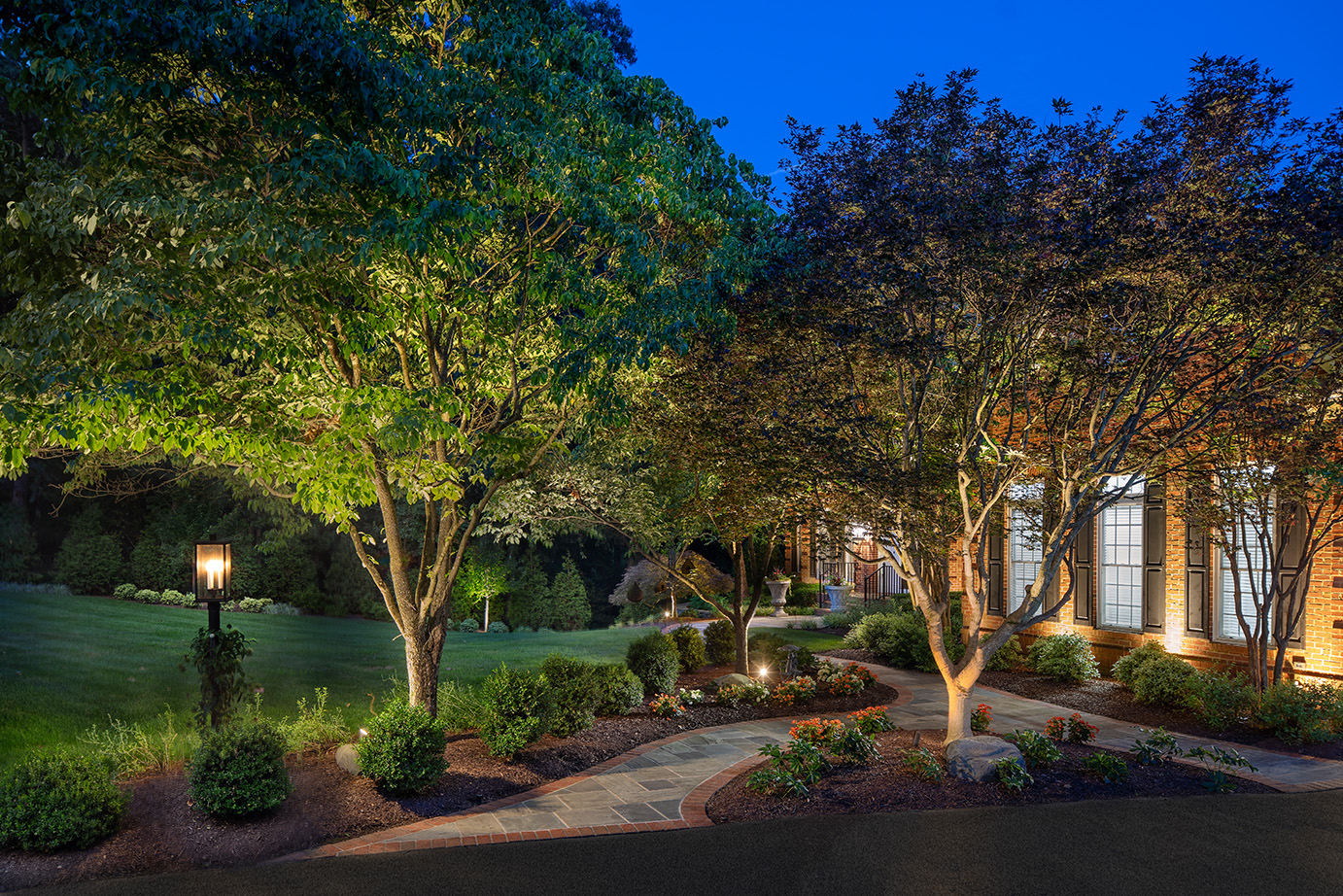
With the sun setting before five o’clock, landscape lighting does some of its most important work in winter, helping family and guests find their way along paths and steps after dark. A well-planned system keeps fixtures out of the way of snow shoveling, with wiring buried safely below the surface, so the garden still glows on a December evening.
Irrigation needs the same kind of foresight. Water left sitting in the lines can freeze and crack them, and the damage often goes unnoticed until the system is turned back on in spring. To prevent that, we design systems that drain completely and keep key parts easy to reach for a quick fall shutdown.
Building for the Long Run
When comparing proposals for a landscape project, most homeowners naturally focus on the design and the materials, since those are the parts they’ll live with every day. The work beneath the surface deserves a place in that conversation too, and a landscape partner you can trust should be able to explain how your patio will be built and how water will be managed on your property without leaning on jargon.
At Rossen Landscape, we build for the way Northern Virginia weather actually behaves, so the outdoor spaces we create for clients in Great Falls, McLean, Potomac and Bethesda look as beautiful after many winters as they did after their first.
Planning a project for next season? Reach out to schedule a consultation with our design team.